
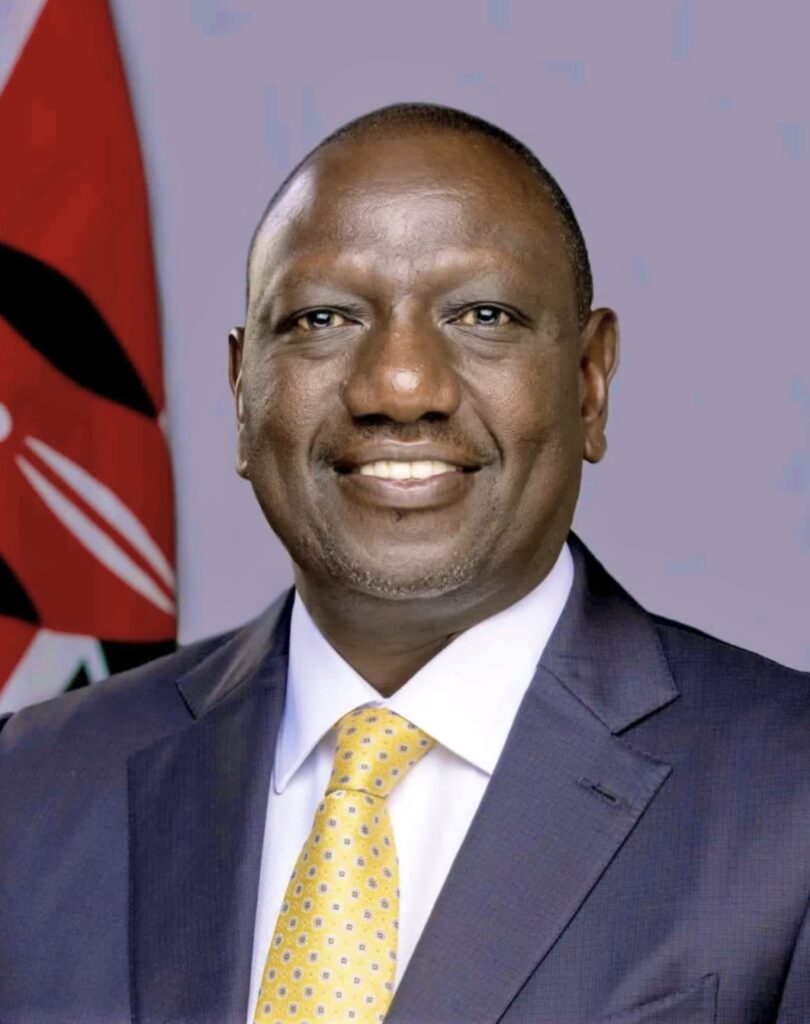
The William Ruto administration’s project-centred approach is failing to deliver the broad economic and practical outcomes that Kenyans expected, making the political outcomes appear to be more relevant than they should be. In the end, it appears the president is seeking political capital out of projects, not to provide solutions that the projects were started to provide.
At the moment, Kenya’s development challenge is not simply whether the government announces enough projects, which Ruto seems to thrive in. It is whether political leaders can turn public promises and public spending into completed infrastructure, productive economic opportunities and measurable improvements in people’s lives. Ruto campaigned on a platform of ‘Bottom-Up’ – empowering the lowly masses to tackle the inequality that had been created by those he labeled dynasties – even though Kenya has no known dynasties in its recent political history other than the families that have been at the centre of the nation’s politics since independence.
It is apparent to observers that Ruto’s government can gain, and may have gained, political mileage from announcing, launching and commissioning projects but that result is one-sided and may be deceptive, even in a field where impressions matter more than reality – citizens measure the impact of projects on relevance, jobs, economic well-being while the administration judges them from the political impact that they have – that it is performing while its rivals are not. However, ‘performance’ using public funds must show direct impact in the lives of the people which is not the same with Ruto’s projects as the most direct beneficiaries are contractors, corrupt government officials who are suspected to receive kickbacks from contractors, and the politicians who launch projects that may never be used.
In the most visible development area, roads, the William Ruto administration inherited projects that were started way back before he started his public campaigns to be president. Some of those projects were funded with loans or grants from foreign institutions and government while others were funded by the government of Kenya. Notably, the projects funded, not necessarily totally but a significant percentage, have suffered. Some have been abandoned, contractors had fled the sites and money appears to have been lost. In other projects that have been continued, like the Mau Mau road, there is a direct political impact – Ruto expects to reap political support from the beneficiaries of the road, even though it is the duty of government to provide and support infrastructure irrespective of which political side citizens support. The same can be said of the dualing of the Mau Summit road, which leads to Ruto’s own home county, Uasin Gishu. There have been rather pedestrian arguments forwarded to justify the project – that Luo Nyanza, one of the regions it will serve, was ‘neglected’ by previous government which developed Kikuyu regions – like the dualing of the Thika Road, which led directly to former President Mwai Kibaki’s Nyeri region; the Mau Mau Road and extension of the Thika Road from Kenol to serve Uhuru Kenyatta’s Kikuyu bedrock.
“It is now the turn of Ruto to develop his region,” says Kipsang Melly, 45, an accountant in Nairobi. “Ruto cannot leave office without developing his region. That is what is expected and that is what he must do.”
Melly has a point – in the corruption-infested governance of African states, it is not unusual for Presidents, ministers, top civil servants, to create publicly funded projects that benefit their home communities. In the counties, where governors seem to have absolute say on how funds are spent – although the law and Constitution directly state otherwise, a statement that is negated by the same laws granting the governors almost absolute power to hire and fire – governors have started projects that benefit their villages, constituencies and not aimed at the progress of their counties. In Migori for instance, whose first governor was recently convicted for the murder of his girlfriend – the governor started a road project that passed outside his rural home. His successor has also started a similar project that passes by his home, which is only five kilometers from the nearest tarmac road. That governor had to find an excuse of routing the road to serve a nearby village to justify spending money that could have gone to water supply.
The ongoing ‘Affordable Housing’ programme has been lauded by Ruto and his administration as an important activity that is creating jobs and will lead to development. That is fallacious as the housing project is not an economic activity — it will not lead to economic growth and is in fact conceived backwards; the country is supposed to create wealth and incomes for people who will then seek and buy or rent accommodation. The Affordable Housing programme should have come AFTER deliberate industrial development that could create jobs and wealth.
There is also a list of projects whose conception was questionable from the beginning, have not been completed or have been totally abandoned to date. For instance, the industrial parks programme started by former Trade and Industry CS Moses Kuria has sunk – his successor has not directed funding to it while the contributing counties are underfunded and receive unreliable remittances from the national government to fund those projects. The result is that there are white elephants lying around all over the country, from Migori to Kirinyaga and Mombasa.
While there are issues with Ruto’s handling of projects, he is not entirely responsible for their failure or non-completion. Several government projects have been started and stalled after those that led them are moved or the political tide changes. The projects, most of them directly funded by the government, stall because funds are usually not allocated to them in successive financial budgets to ensure they are completed. Some also stall when their managers are transferred to other departments or leave government. In some cases, the projects are abandoned because contractors have not been paid or government officers expected to ensure their completion sabotage them when they are not paid bribes. One such project that has stalled for years is the Migori District Headquarters, started around 1983 and stalled to date.
Ruto’s obsession with projects sometimes not only appears absurd but has gone to ridiculous extents. Because his politics is built on impressions, his handlers and supporters often have to identify old government projects for him to launch when he visits. That has seen him launch old NGCDF projects, police stations, water taps and stalled road projects. He was in a humiliating situation when he visited Trans Nzoia county and in an unpresidential attack, lunged at local governor George Natembeya, stripping him of state protection before he ‘launched’ a market that had been initiated and funded by the county government that Natembeya heads. After the tirade had ended and Ruto gone back to luxurious State House in Nairobi, Natembeya had the plaque Ruto had unveiled at the market removed and replaced with a county plaque. It should have been an embarrassing situation and it is unclear if Ruto was advised of how the project was funded, but he could also be a victim of his own methods and strategies – he must launch something and before his temper leads him to fire one of his aides, they must find something, anything, for him to launch.
Has Kenya’s politics of visible projects become a substitute for the harder work of building a productive economy, functioning public institutions and improving ordinary citizens’ lives? That is an important question and the answer is a direct YES! While most of the projects are well planned and thought out, some have been a response to localised demands and the president’s reaction to declare that he has “set aside” (“tumetenga“) specified amounts of money for projects informs his tendency to make ‘roadside declarations’ that cannot be executed due to the absence of policy or legitimate government direction backed by budgetary allocations. Projects are not necessarily bad, but William Ruto has made their announcement, launch and visibility a political issue from which he wants to reap without the commensurate expected benefits to wananchi. This is the strategy that has failed spectacularly as Wananchi now see through the facade of performance that only exists in the mind of the president, not in reality, or what Kenyans call, ‘Ground’ – there is nothing on the ground.