
As Parliament rolls back mandatory live result streaming, East Africa’s economic powerhouse faces a volatile political realignment marked by fracturing regional alliances and deep institutional skepticism.
NAIROBI—In a capital accustomed to the thunderous theater of political mass rallies, the most consequential shift in modern Kenyan democracy has arrived with a whisper.
A quiet legislative maneuver to remove the legal requirement for the Independent Electoral and Boundaries Commission (IEBC) to transmit live election results has fundamentally altered the architecture of the upcoming 2027 general election. While the public square remains largely subdued—distracted by economic pressures and wearisome political fatigue—political insiders and regional analysts recognize the shift for what it is: a structural pivot designed to re-engineer the mechanics of political survival.
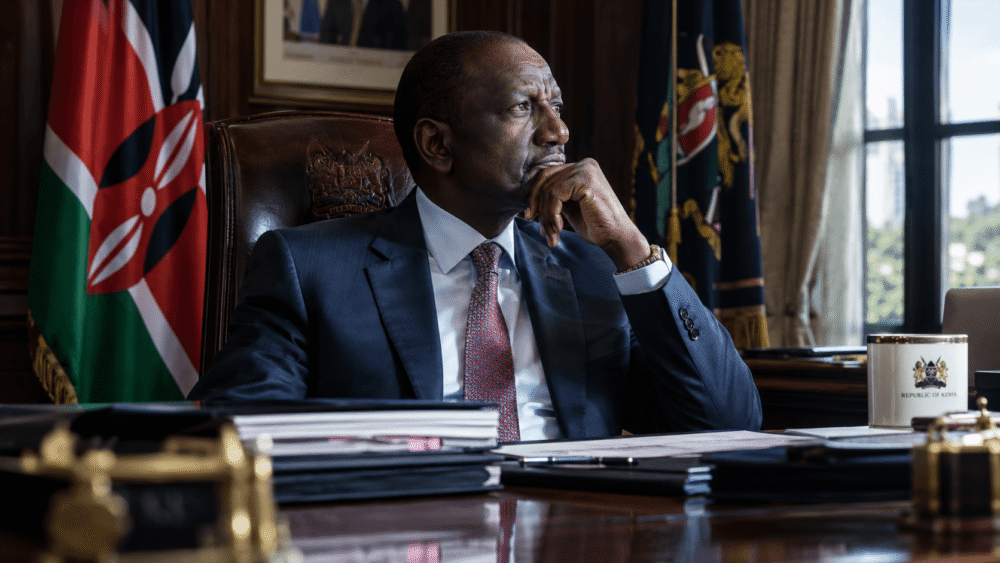
At the center of this storm is President William Ruto. Facing a rapidly deteriorating electoral arithmetic, the president’s political machinery is orchestrating a calculated retreat from transparency to regain control over an increasingly hostile electorate.
The Math of Discontent: Losing Mt. Kenya
President Ruto’s path to the presidency in 2022 was paved by an unprecedented coalition, anchored heavily by the vote-rich Mt. Kenya region. Four years into his term, that foundation has fractured. Economic headwinds, unfulfilled fiscal promises, and shifting local dynamics have turned what was once a guaranteed stronghold into a political liability.
For an incumbent trailing in the regions that traditionally decide Kenya’s presidential contests, conventional victory pathways have narrowed to a razor-thin margin. Denied a clear majority in his former heartland, Ruto’s strategists are looking southward toward Luo Nyanza to buoy his numbers—a pivot fraught with historical friction and complex regional rivalries.
The Western Front and the Sifuna Phenomenon
Compounding these troubles is the rapid erosion of support in Western Kenya’s Luhya community. Ruto’s initial foothold in the West was secured largely through the institutional weight of Prime Cabinet Secretary Musalia Mudavadi and National Assembly Speaker Moses Wetang’ula. However, both leaders find themselves increasingly politically neutralized on the ground by the meteoric rise of Nairobi Senator Edwin Sifuna.
Sifuna’s aggressive populism and formidable organizational grip have galvanized Western Kenya, leaving Ruto visibly aggrieved and scrambling to plug the dike. With his Western firewall cracking, political analysts note that Ruto’s truly assured voting blocs have shrunk back to his core Kalenjin base.
Engineering the Ballot: The IEBC Factor
It is against this backdrop of narrowing regional support that the legislative changes to the IEBC take on profound significance. Critics argue that removing the mandate for live-streamed results from polling stations is a preemptive defensive strategy. Without real-time data transparency to cross-reference against final tallies, the window for centralized data management widens significantly.
This structural vulnerability is compounded by questions surrounding the commission’s independence. Appointments within the IEBC have consistently faced allegations of executive patronage, feeding public perception that the electoral body is being positioned to safeguard regime interests rather than institutional neutrality.
Markets, Stability, and the Cost of Uncertainty
For international investors, sovereign debt holders, and multinational corporations operating out of Nairobi, political predictability is a vital asset. Kenya’s economic fortunes are inextricably tied to its democratic stability. Injecting ambiguity into the vote-transmission framework threatens to reintroduce a heavy country-risk premium just as the economy attempts to stabilize.
Diplomatic partners and foreign capitals are watching closely, weighing the promise of administrative continuity against the latent instability of a compromised electoral process.
As the countdown to 2027 accelerates, President Ruto’s high-stakes gamble is clear. By trading institutional transparency for tight centralized control, he hopes to engineer an unlikely political triumph. Whether this strategy secures his tenure or triggers an explosive democratic reckoning remains the defining question of East Africa’s political future.
Have an opinion? Channel it to: editorial@coursel.online